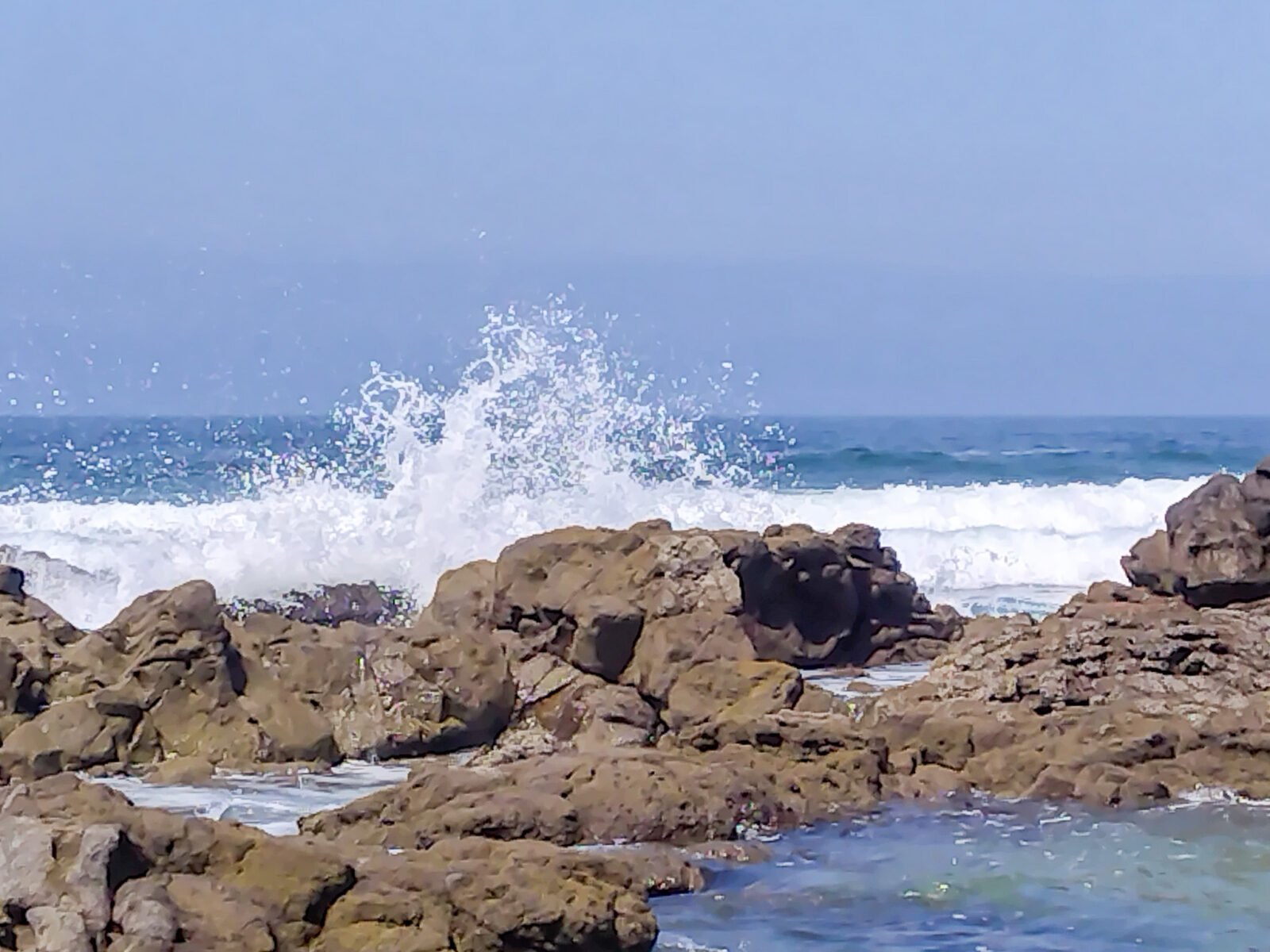
The practice is not about sitting in darkness. It is about removing the obstruction — so what you already sense can reach you more clearly.
In the previous piece I wrote about fear as an obstruction — not to the situation itself, but to your own perception of it. When something is feared and unexamined, it places itself between you and the broader sensing that was already arriving. The signal you were receiving gets interrupted. What you knew, felt, and perceived becomes muted, partial, harder to trust. The practice of facing the fear is, in this sense, less about courage and more about restoration — clearing the way back to what you were already perceiving before the obstruction took up residence.
But how, exactly? This is where most people get stuck — not in the understanding, but in the doing. They hear “face the fear” and imagine something dramatic: a confrontation, a catharsis, a sustained journey into darkness. None of that is what is being asked. The practice is quieter and considerably more practical than that.
One question, asked honestly
The entry point is a single question: if the worst version of this actually happened — the one I most hope won’t — what would I do?
Not: how would I feel. Not: how would I prevent it. Not: could I survive it. Just: what would I do. A direction. A next step, however rough. Something that transforms the scenario from a formless presence occupying space in your awareness into something with a shape — and therefore, with a limit.
This question is not a prediction. Asking it does not make the outcome more likely. The scenario is already in your mind — it was there before you asked. What asking does is bring it forward, into the light where it can be seen clearly, rather than leaving it half-visible at the edge of awareness where it functions most effectively as a disruptor.
You are not trying to solve the worst case. You are trying to give it a shape. A shape has edges. Edges mean it ends somewhere. And that is enough.
Somatic Clarity
The answer does not have to be complete
Most people postpone this exercise because they imagine it requires a watertight plan — a full resolution of the scenario before they are allowed to look at it. That is not what is needed. The answer can be rough. It can be incomplete. It can be a person you would call, a first step you would take, a single thing you would do before anything else. What matters is not the quality of the answer but the act of forming one — because forming one, even a rough one, ends the formlessness. And it is the formlessness that drains you, not the scenario itself.
When something takes a shape, the mind can work with it. It can set it down and return to the present. It can place it somewhere — not solved, not resolved, but located. And located things do not require the constant low-level attention that unlocated ones do. The energy that was maintaining the avoidance becomes available again. The perception that was being blocked begins to clear.
What comes up when you sit with it
The question, when asked genuinely and without rushing to close it, tends to bring things with it. Not only thoughts, but feelings. A tightening. A reluctance. Sometimes something that feels closer to grief than to fear — a sense of what would be lost, what would change, what would no longer be possible. Sometimes an older fear that does not quite match the current situation but arrives alongside it.
These are worth staying with briefly — not analysing, but noticing. Because what surfaces when you face the worst case is often not about the scenario at all. It is about what the scenario would mean. The exposure of something you have been protecting. A belief about yourself that the scenario seems to confirm. An attachment you did not know was there until the question brought it forward.
You do not need to resolve any of that. You just need to let it be present long enough to ask the practical question — and let the answer arrive as roughly as it needs to in order to be honest. The roughness is not a failure. It is what honesty looks like at the edges of what you can currently see.
Not a contract — a clearing
The direction you arrive at is not a promise. It is not a plan you will be held to. When the moment actually comes — if it does — you will bring everything available to you then: different information, different resources, different clarity. You will make the best decision you can in that moment. What the preparation gives you now is not a script for that moment. It is something quieter and more immediately useful: the knowledge that you have already looked. That you did not turn away. That even the version of events you most feared is something you have faced and found a shape in.
That is the clearing. Not a resolution of the fear — it may still be there. But the obstruction it was creating between you and your own perception is reduced. The signal comes through more clearly. Not because the situation has changed. Because you have stopped standing in front of something without looking at it — and what was blocked behind it can now reach you again.