
The Books I Read Because I Should, and the Books I Simply Want to Read
There are books I have to read.
Books I need for work, or because there is something I need to learn or look up.
Then there are books I think I should read.
And then there are the books I read simply because I want to.
Most of what I have been reading lately belongs to this third category.
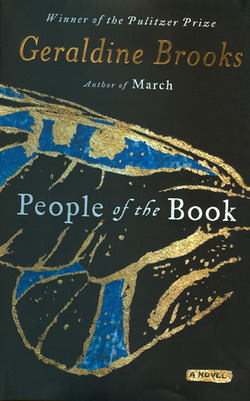
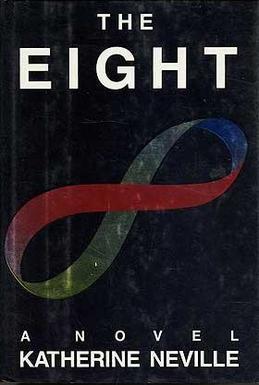
People of the Book and The Eight, which I am reading now, are both books like that for me.
I do not need them for work. I am not reading them because there is something in particular I need to learn.
I read them in much the same way I might watch a film.
For pleasure.
And yet reading is a slightly more active kind of entertainment.
With a film, the images and sounds arrive already formed. Even the pace is largely decided for you.
A book gives you mostly words.
From those words, you build the room. The street. The face. The voice.
And if your attention wanders for a moment, you may suddenly find yourself thinking,
Wait. Who is this person again?
and going back several pages.
Reading requires something from the reader.
Feed Yourself, Too
These days, we can also give a book to AI and ask for a summary.
I even have a friend who does this.
I do not think there is anything wrong with that.
If what you need is the information contained in a book, it can be an extremely useful way to get it.
I use AI myself.
But knowing what is in a book and reading a book are not quite the same thing.
We talk a great deal about AI and the quality of its input. What we give it affects what it can give back to us.
I suspect the same is true of people.
Think about writing an email or a letter.
Writing clearly.
Finding a degree of formality that fits the relationship.
Saying no without being unnecessarily harsh.
Finding words for something that is difficult to say.
Knowing the rules of good writing helps. But I do not think rules alone are enough.
You have to have read.
You have to have encountered words you would not normally use.
Sentences you would never have constructed yourself.
Writing that made you slow down.
A paragraph you had to read twice.
A page that sent you backwards because you realised you had missed something.
A sentence that stayed with you long enough to interrupt your reading altogether.
All of that becomes part of your input, too.
We need to feed ourselves good writing.
AI can now produce a perfectly acceptable letter.
But whether that letter reaches someone as your letter is another question.
What do you choose to say?
What do you leave out?
How much do you explain?
Which words can you actually stand behind as your own?
The depth behind those choices cannot be entirely separate from what you have read, heard, seen, and lived.
That is one reason I have sometimes read older literature, as well as fiction translated from other languages and cultures.
Writing whose vocabulary, rhythms, structures, or way of seeing the world differ from the language I encounter every day.
Some of it is not particularly easy.
There are books that make me think,
This is going to take a while.
That, too, is part of the experience of reading.
The Pleasure of a Well-Marked Trail
That does not mean I always want to climb a mountain.
People of the Book and The Eight are, for me, relatively easy books to travel through.
If reading is a journey, these are places where the paths are reasonably well marked.
They are unfamiliar enough that I may occasionally need to check the map.
But I am not hacking my way through undergrowth.
I have time to look at the scenery.
And both books contain many of the things I enjoy.
History.
Time.
Connections between people.
And the way one thing can take on a different shape depending on who is looking at it, and when.
Something understood one way by one person may look entirely different to someone else.
Something accepted in one period may be rejected in another.
Later still, its meaning may change again.
What happened and what people make of what happened are not necessarily the same thing.
I seem to like stories that let me watch that happen.
So if you feel like travelling somewhere this autumn, but do not particularly feel like hacking through a literary jungle, these are rather enjoyable places to go.
Visiting a World I Would Never Choose
Another book I read recently was Miyuki Miyabe’s Gamōtei Jiken.
It was interesting to me for a different reason.
Its protagonist, Takashi, repeatedly makes choices I would almost certainly not make.
More than once, I found myself thinking,
Why would you do that?
And then I kept reading.
I do not have to like him.
I do not have to agree with him.
For a while, I simply spend time in a world where choices I would not make are nevertheless being made.
There are not many other forms of entertainment that ask us to do that for hundreds of pages.
Travel can do something similar.
Go somewhere unfamiliar, and things you have always considered “normal” may no longer be normal at all.
The sense of time may be different.
The distance people keep from one another.
Food.
Manners.
Things you had never even recognised as your normal become visible because, suddenly, they are not everyone else’s.
Books can take us even further.
Into another period.
Another culture.
Another position in society.
Sometimes into the life of someone whose choices we would never make ourselves.
We do not have to like the place.
We do not have to move there.
We can visit, see that such a world exists, and come home.

When One Camera Became Several
I did not always read this way.
There was a time when one of the great pleasures of reading was disappearing completely into a story.
That can still happen.
But over the last few years, I have noticed another part of myself remaining slightly outside the story as I read.
So this is how the world looks to this character.
This writer seems drawn to this kind of person.
Of course this looks different from this point in history.
And what do I make of it, from where I am now?
It is a little like having several cameras running at once.
I can enter the world of the book without losing sight of the fact that I am here, now, reading it.
Neither position has to disappear.
Some time ago, a friend and I were talking when she said,
“I think maybe the world I can see simply isn’t visible to the other person.”
I thought there was something in that.
Sometimes another person genuinely does not seem able to see what I am describing.
They may be receiving what I say on an entirely different map.
And yet, sometimes I can imagine why they cannot see what I see.
What are they looking at?
Where are they looking from?
Why might the world look like that from where they are standing?
That does not mean I can truly see their world.
But I can sometimes think,
Ah. From there, perhaps it does look that way.
Perhaps all the books I have read, and all the places I have travelled to, have something to do with that.
Both have repeatedly taken me somewhere other than where I already was.
Knowing Another World Exists — and Coming Home
Knowing that there is more than one world does not mean we will understand everyone.
If anything, perhaps it makes it easier to accept that sometimes we will not.
I can talk with this person here.
I can work with this person on this.
Beyond this point, perhaps we go our separate ways.
There are times when I will still say, “Please stop doing that.”
There are times when I will say, “No, I disagree.”
But we do not need to share the same understanding of everything.
When you know that different worlds can exist at the same time, the other person does not have to disappear. Neither do you.
And perhaps that makes self-expression a little less dangerous, too.
This is what I think.
This is what I see.
This is not what I would choose.
Saying those things does not require the other person to adopt my world.
And if they do not, my world does not cease to exist.
Knowing that another world exists does not mean having to enter every one of them.
We can choose where to go.
Where to stay a little longer.
When to come home.
And with whom we want to walk, and for how far.
That is one reason reading matters to me.
It is entertainment that lets me travel somewhere I have never been.
Sometimes the road is difficult.
Sometimes I stay much longer than expected.
Sometimes I discover that a place is simply not for me.
And sometimes I find a well-marked trail and spend the journey looking around.
That seems to be the kind of travelling I am doing this autumn.
When I close the book, I come home.
But I bring back a view I did not have when I left.
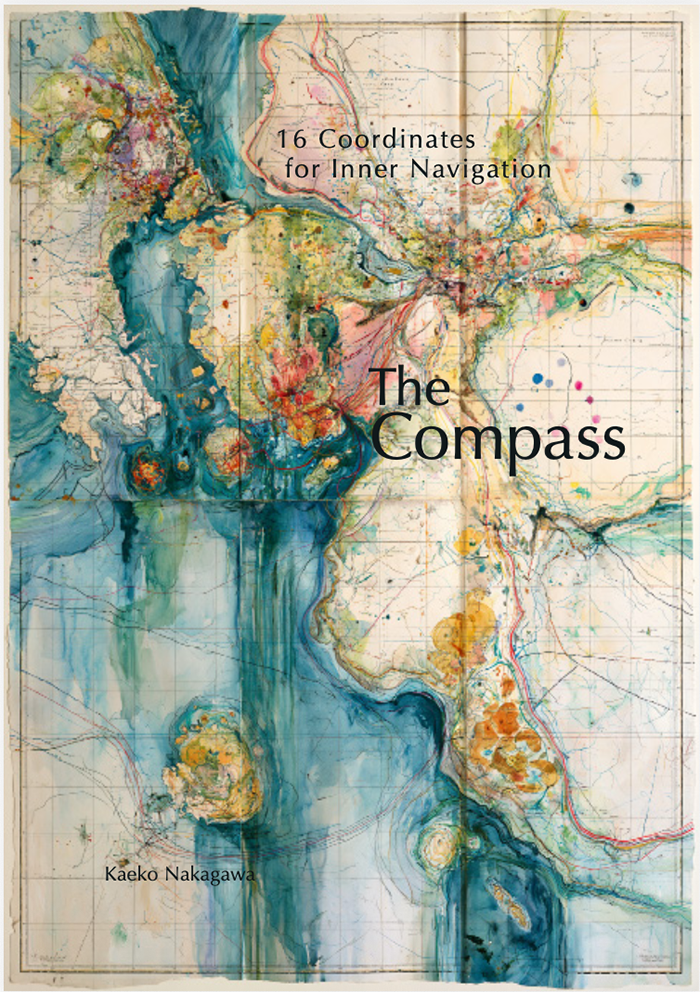
The Compass: 16 Coordinates for Inner Navigation — now available.
After closing someone else’s book, there are 16 coordinates for returning to your own location.
Not to find the answer,
but to read the map with your own compass — and keep navigating.