Have you ever been the best at something?
At school, in sports, at work. Anything.
Now, have you ever found yourself in a situation where you might not be?
When something goes well, we feel pleased. When it doesn’t turn out as we’d hoped, we might feel disappointed or frustrated.
But what those outcomes mean to us varies from person to person.
What one person considers a great success might leave another feeling dissatisfied. Even the same result can mean something different depending on what we were hoping to achieve.
After all, assessments depend on what we’re being measured against, and under what conditions.
You might be the best in one setting and fairly ordinary in another. Something that once seemed impossible may become easy, while something you used to do effortlessly may become difficult.
Still, we use these experiences and assessments to build an understanding of who we are.
This is the kind of person I am.
There’s comfort in that.
But what if we’re wrong?

The Self You Discover Isn’t Always the One You Hoped For
Discovering a side of yourself you never knew existed sounds rather wonderful.
A hidden talent. An unexpected strength. A possibility you hadn’t imagined.
And sometimes, that’s exactly what happens.
But not always.
You might discover that you’re not as capable as you thought.
That you struggle to celebrate someone else’s success.
That the confidence you had disappears the moment you’re outperformed.
Or that, when the moment comes, you’re too frightened to do anything at all.
You might meet a version of yourself you’d rather not have known.
For some people, that possibility is a considerable risk in itself.
Because something they’ve always believed about themselves might fall apart.
Without necessarily realising it, we sometimes arrange our lives to avoid such encounters.
We stay away from places where others might be better than us. We avoid situations in which we could fail. We dismiss someone’s opinion before we’ve really heard it.
All to protect our place in the world.
Yet the more we feel we have to protect, the fewer directions we may find ourselves able to move.
Even Explorers Turn Back
Recently, I was watching a livestream by Katsuji Yoshida, a Japanese cave explorer.
A viewer commented that, given the possibility of dying during an expedition, it made sense to enjoy good food whenever the opportunity arose.
Yoshida agreed. He went on to suggest that, since living inevitably involves risk, the presence of risk alone might not be a sufficient reason to do nothing.
That stayed with me.
It also reminded me of something he’d said in another video.
When conditions become too dangerous, he turns back.
Because the point is to come home alive.
To me, those two ideas belong together.
For someone exploring places no one has ventured into before, uncertainty and danger are part of the territory.
But precisely because the risks are real, preparation matters. So does paying attention to conditions and knowing when to stop.
Sometimes you go forward. Sometimes you turn back.
Abandoning an expedition doesn’t necessarily mean you’ve failed. It may mean you’ve made a sound decision not to press on recklessly.
I like that way of thinking.
Taking a risk isn’t the same as ignoring one.
Feeling afraid isn’t the same as allowing fear to make your decisions.
Sometimes fear accompanies a decision to go forward. Sometimes it prompts you to stop, investigate, and prepare.
And sometimes, you decide not to go at all.
Before You Take That Leap
There is no shortage of advice about overcoming fear.
If it scares you, do it.
Don’t be afraid to fail.
Believe in yourself.
Such words can be genuinely helpful. They may even change someone’s life.
I know that words have the power to move us.
But I wonder about something.
What exactly is this person afraid of?
What might they actually lose?
What do they know, and what don’t they know?
What happens if we urge someone to take a leap before exploring those questions?
Imagine someone who’s terrified of running out of money being told to overcome that fear by spending it.
Perhaps what they need isn’t reassurance that they’ll somehow manage without money, but a better understanding of how to manage what they have.
Or someone who believes they couldn’t survive on their own being encouraged to leave their current life behind.
Perhaps the first step is to investigate what independent living would actually require, and make a practical plan.
How closely does the danger we imagine correspond to the danger that actually exists?
Without examining that, taking action doesn’t necessarily resolve the problem.
It might even make matters worse.
And if things go badly, what happens when someone concludes that they simply weren’t brave enough, or didn’t believe strongly enough?
They may return to the same advice, hoping that next time they’ll finally get it right.
Words they initially turned to in order to make their own choices may gradually become something they feel unable to make choices without.
That, too, is a possibility.
Words Can Be Both Cages and Keys
Throughout childhood, we absorb all kinds of descriptions of ourselves.
You’re clever.
You’re clumsy.
You’re not good enough.
The person saying these things may barely give them a second thought.
But for the person hearing them, those words can become part of how they define themselves for years.
What’s interesting is that even rejecting a label doesn’t necessarily free us from it.
Someone who grows up being told they’re useless may spend much of their life trying to prove they’re anything but.
It looks like defiance, yet their life may still revolve around someone else’s definition.
I’ve often been told that I overthink things.
But thinking carefully about words isn’t necessarily about trying to persuade someone else.
Sometimes it’s about not allowing myself to be drawn into a world defined by someone else’s language.
Is that really true?
What is that judgement based on?
Could there be another way of seeing it?
Questions like these can make something we’ve always taken for granted look quite different.
Words can loosen the hold of other words.
But there’s a catch.
The word courage might help one person feel free, while leaving another convinced they must always be brave.
It’s okay to fail might bring relief to someone, while making someone else feel inadequate for not being able to take failure in their stride.
The same words can work differently for different people.
And when we turn a phrase that once helped us into an answer that ought to work for everyone, we risk building another cage just as we’ve opened the first.
The Way We Hold Ourselves
Over time, we develop an understanding of who we are.
We need some sense of ourselves to navigate everyday life.
But when that understanding becomes something we feel compelled to maintain, I notice a certain tension.
My body tightens.
I brace myself.
As though there’s something I need to defend.
And sometimes, I’m not entirely sure what that something is.
At other times, discovering that I’m not quite as impressive as I’d imagined can make me laugh.
Oh. So that’s where I’m at.
There may be disappointment. Embarrassment, even.
But there’s also an unexpected lightness.
The day doesn’t come to an end simply because I haven’t lived up to my own image of myself.
We weren’t born knowing our grades, our job titles, or what other people thought of us.
The picture we gradually form of ourselves can help us make sense of our lives. But it can also, without our noticing, begin to restrict how we move through them.
When that defensive posture softens, possibilities that once seemed unavailable may become visible.
And they don’t necessarily involve taking on a new challenge.
Perhaps it’s deciding to stop.
Perhaps it’s asking for help.
Perhaps it’s continuing exactly as before.
Even when the action looks the same, the place within ourselves from which we choose it may be different.

So, Where to Next?
Sometimes I find myself in situations where I might lose, without having realised that was a possibility.
And sometimes, the outcome reveals that I’m not quite as capable as I thought.
Of course, I don’t enter those situations with the intention of discovering my shortcomings.
Fear is still fear. Losing can still hurt.
But when I encounter an unfamiliar side of myself, I think I’m less inclined than I used to be to reject it.
I don’t live in order to test myself.
But living sometimes puts me to the test.
And when I discover something about myself that doesn’t fit the picture I had, perhaps there’s room for that, too.
Not always, of course.
What looks like a courageous step for one person may be a reckless one for another.
And for some, turning back may require far more courage than pressing on.
Where am I now?
What’s actually in front of me?
What am I afraid of, and what am I trying to protect?
Sometimes the answer leads us forward. Sometimes it leads us back.
And every now and then, we encounter a version of ourselves we never expected.
When that happens, I imagine I’ll still be surprised, disappointed, perhaps even amused.
I wonder who I’ll meet next.
Whether you move forward or turn back.
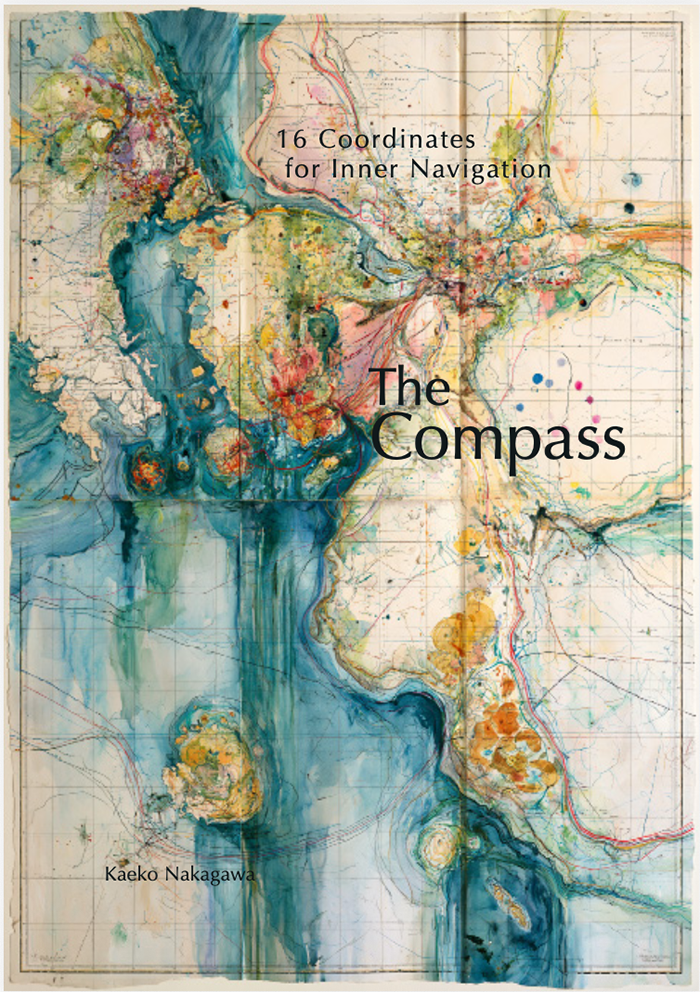
The Compass — 16 Coordinates for Exploring Where You Are.
Available now.