
What May Already Be Happening
When something new is in front of us, we may find ourselves asking:
What if I fail?
Can I be sure this will be okay?
Will I disappoint someone?
And sometimes, those questions come before a much simpler one:
Do I actually want this?
When something is familiar—something we’re good at, or something we know we’ll be okay with even if it doesn’t work out—we can often choose without much difficulty.
Things change when we step into unfamiliar territory, where we can’t predict the outcome.
Without noticing it, we may begin to assess a new possibility in terms of what might go wrong, rather than whether we actually want it.

When That Way of Assessing Things Was Necessary
There is something very natural about wanting something and trying it out in the world.
You try.
It doesn’t work.
You try again.
Especially as children, there can also be a Look at me. Watch this. quality to it.
We want someone to know what we’re doing.
But there may have been times when following what we wanted—and having enough room to find our way through trial and error—wasn’t really available to us.
There could be many reasons for that.
We don’t necessarily need to find the cause.
What matters here is something else:
What did I notice at the time, and what did I choose to do?
A Choice That Was Once Yours
One of the things we hold in Somatic Clarity is that what is here now has a reason for being here.
If you learned to consider Will I fail? before Do I want this?, that doesn’t necessarily mean something went wrong.
There may have been a time when you needed to pay close attention to what might go wrong.
Perhaps you needed to consider what was expected of you, or whether you might disappoint someone.
And in that situation, you made a choice.
Over time, you became very good at noticing and assessing those things.
If that way of approaching the world is still with you now, it may have been part of how you learned to move through the circumstances you were in.
So the first move doesn’t have to be rejecting that choice.
That’s what I chose then.
Not: That was the right choice.
Not: That was the only choice I had.
Simply:
That’s what I chose then.
To honour that choice is to not reject the person you were for having made it.
And from there, another question becomes possible:
Is that choice still appropriate for me now?
Is That Choice Still Appropriate Now?
Looking back isn’t about finding who’s at fault.
Nor is it about identifying what went wrong, fixing it, and expecting that to change who we are now.
The question is what you chose then—and whether that choice still fits where you are now.
Something that was necessary once may no longer be necessary.
And something that still supports you doesn’t need to be discarded simply because it came from the past.
Understanding the past doesn’t rewrite it.
It gives the person you are now another opportunity to choose.
Start With Where You Are
So perhaps the first question isn’t:
How do I fix this?
It is:
Where am I now?
Maybe you notice:
I’ve spent a long time giving more weight to not failing than to what I actually want.
That’s a current position.
You don’t have to erase that way of approaching things.
You don’t have to overcome it.
You can notice that it is there and ask whether it is still appropriate from where you stand today.
The Body Is Not the Authority
In Somatic Clarity, we don’t treat a bodily response as an automatic instruction to go or stop.
The body is not the authority. The body is part of the intelligence.
The body is an important source of information. But it isn’t the sole decision-maker.
So when you notice yourself immediately assessing a situation in terms of failure, you don’t have to interpret that response as a reason to stop.
Nor do you have to ignore it and push through.
You can simply notice:
This is how I’m interpreting my response right now.
And if you recognise that this way of assessing things was once necessary, you can acknowledge that too.
This may be something I once needed.
Then the question becomes:
What do I choose now?
That, too, is part of knowing where you are.
Moving Forward Is Part of Living
It would be easy to say that the next step is to have new experiences so that the body can gather new information, or so that our discernment can improve.
But I don’t think that’s quite it.
Those things may happen as a result.
They are not the reason we move.
We move because moving is part of living.
Sometimes things work out.
Sometimes they don’t.
Sometimes we embarrass ourselves.
Sometimes we come back from an experience knowing we would never choose it again.
Sometimes we discover that what we wanted wasn’t what we expected at all, and we choose again.
All of that is part of living.
Our ability to observe and discern may grow along the way.
But that doesn’t need to be the goal.
We’re not living in order to see more clearly.

And Life Continues
There may be an old pattern that still shows up in the body.
Behind it may be a choice you once made.
Understanding that doesn’t mean the past needs to be resolved.
That’s what I chose then.
For now, that can be enough.
And life continues.
So what do you do from here?
You don’t have to reject the choice you once made.
You can honour it—and still choose again from where you are now.
Moving forward doesn’t always mean saying yes.
Sometimes the choice is no.
Either way, it is the person you are now, from where you actually stand, choosing what comes next.
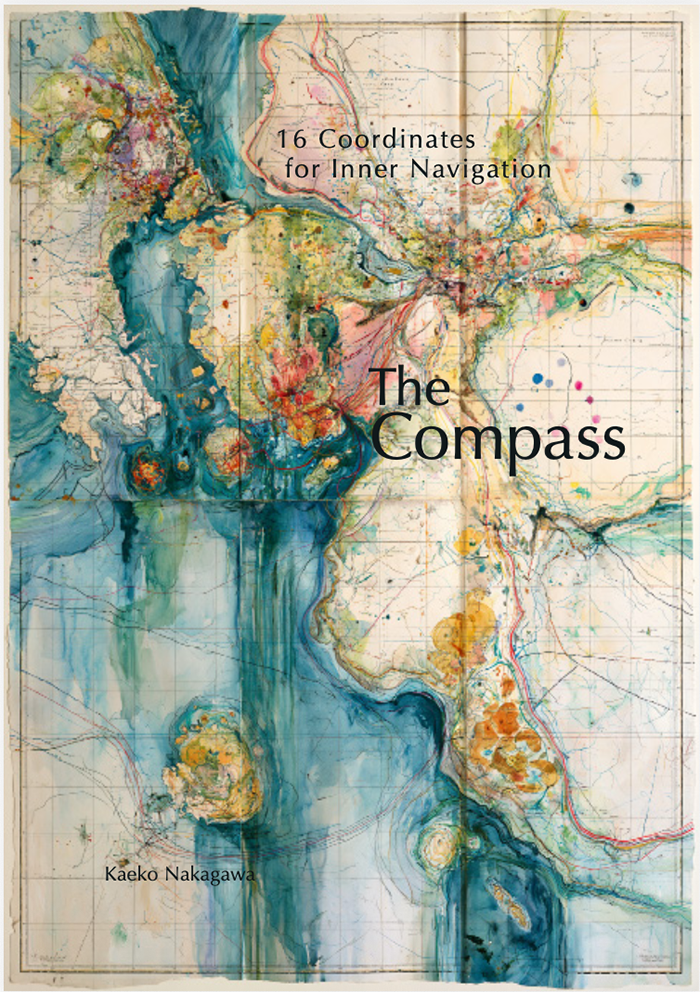
The Compass: 16 Coordinates for Inner Navigation — now available.