You told someone how you felt, and they turned you down.
Before you told them, you weren’t together.
Afterwards, you still weren’t together.
So, did nothing change?
Perhaps you finally found some closure.
Or perhaps you found it even harder to let go.
Things might have become awkward between you.
Or, unexpectedly, you might have grown closer.
Perhaps you simply woke up the next morning and went about your day as usual.
Had you never said anything, another set of days would have unfolded.
Which would have been better?
There is no easy way to say.
But there is one thing we can be certain of.
The world in which you spoke up and the world in which you remained silent are not the same.

Not What You Gained, but What Happened
Let’s consider something a little more ordinary.
You spot something you want in a shop.
You hesitate, decide not to buy it, and go home.
The next day, you change your mind and return, only to discover that it’s sold out.
I should have bought it yesterday.
Sound familiar?
Here, too, there are several possible worlds.
The version of me who bought the item.
The version who considered it and decided against it.
The version who returned to find it already sold out.
And the version who never even knew it existed.
Each one is me.
Yet what happened to each of us is different.
If we look only at the outcome, some of these worlds appear identical.
In each, I end up without the item.
But they are not the same coordinates.
Wanting something.
Hesitating.
Deciding not to buy it.
Feeling disappointed when I discovered it was gone.
Or perhaps feeling a little relieved.
All of these are things that actually happened.
For the version of me who never knew the item existed, none of those experiences took place.
In other words, even when the outcome looks the same, what happened along the way may be entirely different.
It’s not simply what you gained, but what happened in the world you inhabit.
I sometimes think of these differences as coordinates.
A Mole on the Left of Your Nose, or the Right
Imagine placing two worlds side by side.
In one, you confessed your feelings.
In the other, you said nothing.
Looking at yourself in each world, you might struggle to find any difference.
Same face. Same clothes. Same room.
The same breakfast, the same train to work.
Perhaps the only visible difference is that a mole sits on the left side of your nose in one world and on the right in the other.
Something that small.
Or perhaps even the mole is in exactly the same place, and no matter how carefully you look, you cannot spot a difference at all.
Still, these are two different worlds.
In one, you told someone how you felt.
In the other, it did not.
That difference cannot be erased.
Now imagine allowing both worlds to unfold for another ten years.
Perhaps your lives would still look remarkably similar.
Or perhaps you would find yourself somewhere entirely different.
Living in another city. Sharing your life with someone else. Looking out at a completely different view each morning.
How could two worlds that once seemed almost indistinguishable have become so different?
We might never know.
Of course, I’m not suggesting that the position of a mole determines the future.
The mole is simply a way of illustrating a difference we can see.
The point is that we cannot possibly know everything about how events connect across the world.
The World Is Not a Static Map
When we hear the word coordinates, we might imagine a point on a map.
There is a starting point, a destination, and a route between them.
But the coordinates I’m describing are a little different.
The map itself is constantly moving.
Someone goes for a walk.
A dog sets off on its daily outing.
An ant carries food back to its nest.
Rain begins to fall. A train is delayed. Two strangers happen to strike up a conversation.
One person makes a decision while another continues to hesitate.
Someone buys an item, which means it may no longer be available to the next person who enters the shop.
Countless things are happening at once.
One movement intersects with another, which connects to something else.
We cannot even say with certainty where these chains of events begin or end.
And within all this movement are the moments when we appear to have done nothing.
You didn’t tell them how you felt.
You didn’t buy the item.
You didn’t reply.
These, too, are things that happened in the world.
Choosing not to do something doesn’t put the world on pause.
While you hesitate, other people continue moving, the seasons change, and countless events overlap.
And no one can see the whole picture.
So we cannot know how even the smallest difference in coordinates might unfold.
That difference may never become particularly noticeable.
But that doesn’t mean the coordinates were identical to begin with.
We Like to Find Reasons
When something doesn’t go well, we look for explanations.
I should have decided sooner.
I was too cautious.
It just wasn’t meant to be.
When things turn out unexpectedly well, we may tell ourselves something different.
I’m glad I didn’t buy it.
Everything happened for a reason.
Looking back and making sense of our experiences is perfectly natural.
And our actions do have reasons.
We buy something because we want it. We hesitate because it’s expensive. We walk away because we’re afraid of making a mistake.
What we thought and felt at the time was real.
But whether those reasons explain the movement of the entire world is another question.
Someone might confess their feelings, be rejected, and finally find closure.
That closure is something they genuinely experienced.
But it doesn’t necessarily mean they were rejected in order to find closure.
Something we chose not to buy might later turn out to have been a fortunate decision.
That doesn’t mean we refrained from buying it for the sake of that future outcome.
Looking backwards, we can connect events into a story.
Stories can be valuable ways of understanding our lives.
But a story is not the entirety of what happened.
Winning, and Arriving Where You Wanted to Be
Let’s look at this from another angle.
Sometimes, we confuse the state we hope to reach with the means we use to get there.
Imagine having a disagreement with someone.
At first, you simply want them to understand your point of view.
But as the conversation continues, you become increasingly frustrated.
You want to prove them wrong. Win the argument. Make them apologise.
Eventually, they give in.
You’ve won.
But afterwards, your relationship is worse than it was before.
Was that really where you wanted to end up?
Did you want a relationship in which you understood one another?
Or did you want to win?
Those are not the same thing.
Of course, disagreements are complicated. Sometimes the other person is unreasonable. Sometimes there are things we should not compromise on.
Still, it’s possible to become so focused on winning that we lose sight of what we were trying to protect in the first place.
Perhaps something similar can happen on a much larger scale.
You want to protect something precious.
So you fight for it.
But when the fighting ends and you have won, everything around you lies in ruins.
Was the world you wanted one in which that precious thing survived amid the devastation?
Or one in which it remained safe without everything else being destroyed?
In reality, there may be circumstances in which fighting is necessary to protect what matters. Nor can we assume that changing the way we think would eliminate every conflict.
Even so, I think there is an important distinction between our aims and the means we use to pursue them.
Getting the result we wanted is not the same as inhabiting the world we wanted.
When winning and losing occupy all our attention, we may lose sight of the coordinates towards which we are moving.
Both a Piece and a Player
Sometimes I imagine the world as an enormous game board.
On it are countless pieces.
People, dogs, ants.
But these are not lifeless objects waiting for someone else to move them.
They are alive.
When they are hungry, they look for food. When they sense danger, they flee. They fall in love, feel afraid, hesitate, think, and make decisions.
This is how we move.
And I think of myself as both one of those pieces and a player.
That may sound a little strange.
The player moving a piece is also the piece being moved.
So who, exactly, is moving whom?
We could say that I move of my own free will.
We could also say that I am moved by everything else happening in the world.
But are these really two separate things?
There is a world I see from within this particular body of mine.
Yet neither this body nor the world I perceive exists independently of the world as a whole.
Where do I end, and where does the world begin?
The more I think about it, the less certain that boundary becomes.
Both a piece and a player.
What should we call that player?
God? The universe? Life itself?
I don’t really know.
Whatever name we give it, the world simply keeps moving.
And I am part of that movement.
That is how I see it.
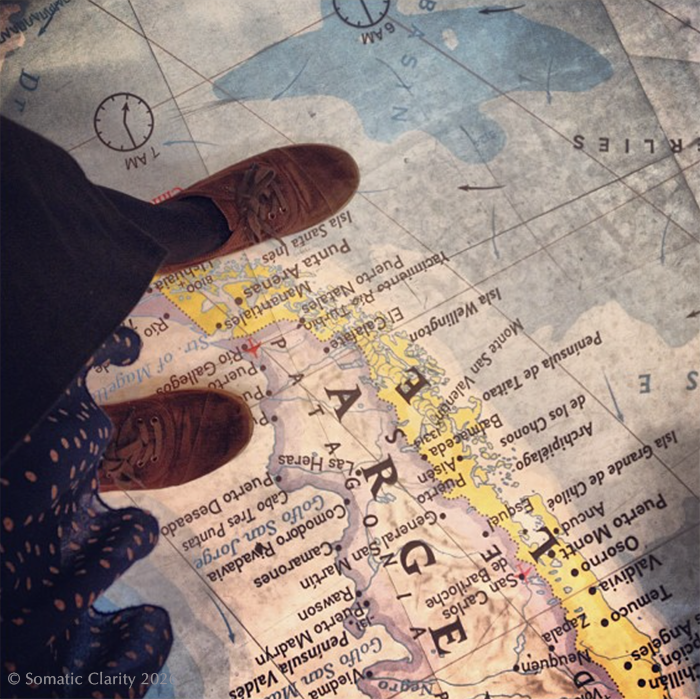
Nothing Changed. Or Did It?
We often judge our actions by their outcomes.
You confessed your feelings and began a relationship.
Or you didn’t.
You bought the thing you wanted.
Or you didn’t.
Sometimes those judgments are useful.
But when we look only at outcomes, we risk overlooking something.
An experience that appears to have brought us nothing is not the same as an experience that never happened.
And no one knows where that difference might lead.
Take a different route home.
Buy a different brand of toilet paper for a change.
Perhaps such a small choice might connect to coordinates you never imagined.
Or perhaps making that choice was already part of what would happen at those coordinates.
We have no way of knowing.
Taking a different route might lead you to meet someone unexpectedly.
That encounter might eventually become part of something much bigger.
But it might not.
It doesn’t guarantee that you’ll suddenly become extraordinarily lucky tomorrow.
It doesn’t mean a long-standing argument will be resolved, or that some wonderful opportunity will fall into your lap.
There is no guarantee that a route deliberately chosen to make something happen will lead where you hope.
Meanwhile, taking your usual route, or considering a change and then deciding against it, each belongs to a different set of coordinates.
Small actions can sometimes be connected to unexpected changes in our lives.
But even then, they are only one tiny part of a world in which countless things are happening simultaneously.
Moving a piece does not necessarily mean moving forward.
We may move right or left.
We may turn back, or remain where we are.
And doing nothing also gives rise to the coordinates of having done nothing.
Those coordinates are certainly different from ones in which we never even knew there was a choice to make.
All the while, the other pieces on the board continue moving.
We cannot know which move will lead to which future.
Years from now, perhaps you’ll find yourself somewhere you never expected.
Wait. How on earth did I get here?
And in that moment, what different views might the version of you with a mole on the right side of your nose and the version with one on the left be looking at?
Perhaps nobody even notices where the mole is.
Still, here we are.
Here, now.
The Compass — Getting to Know Where You Are
Perhaps we don’t even fully understand the coordinates we currently inhabit.
What we choose, what we leave unchosen, what we long for, and what leaves us uncertain.
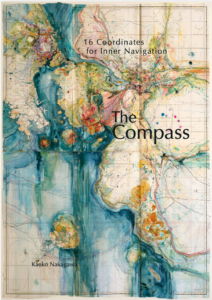
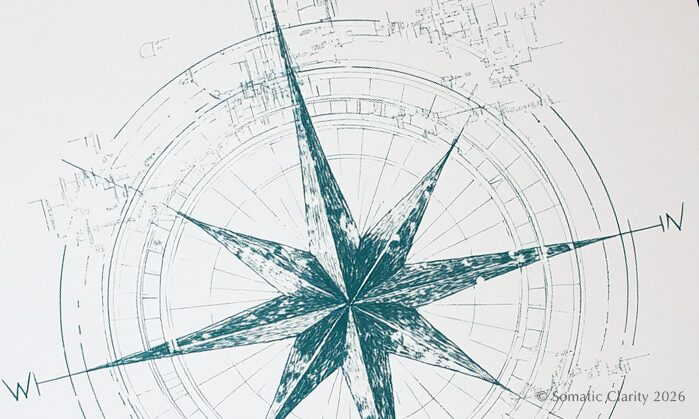
The Compass is a tool for exploring where you are, using 16 coordinates as points of reference.
It doesn’t tell you which direction you should take or offer you the right answer.
Instead, it invites you to look a little more closely, and a little more accurately, at where you find yourself.
A companion for that exploration.
The Compass — 16 Coordinates for Inner Navigation